
How to Build a Balanced Plate for Weight Loss
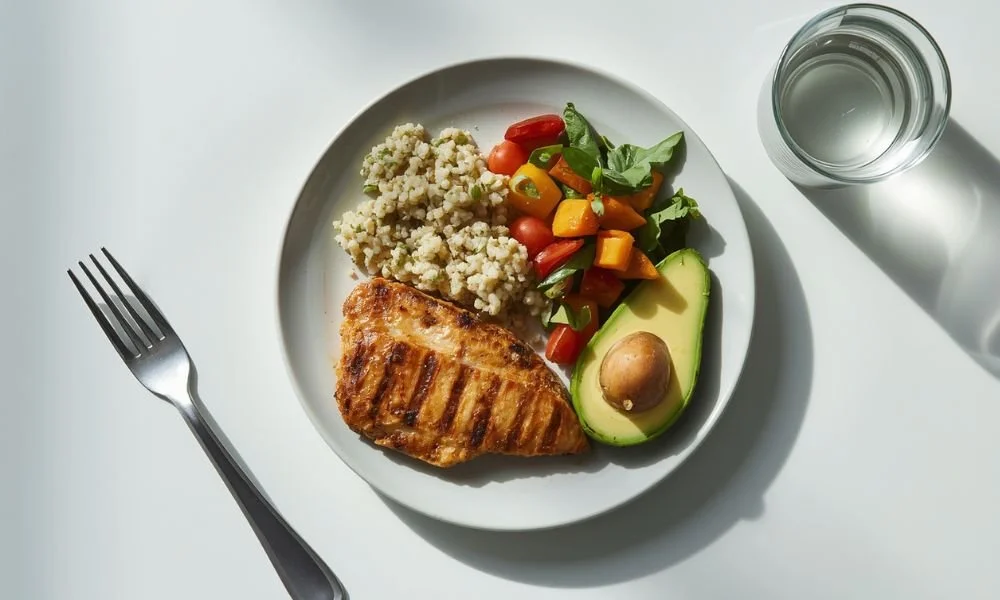
A balanced plate is one of the simplest tools you can use during weight loss.
You do not need to count every bite or follow a complicated diet to start making better choices. A balanced plate helps you include protein, fiber, color, and nutrients in a way that feels realistic.
What Is a Balanced Plate?
A balanced plate usually includes:
Protein
Vegetables or fruit
A fiber-rich carbohydrate
Healthy fat
Water or another low-sugar drink
The American Heart Association’s balanced plate guidance encourages filling half the plate with fruits and vegetables, along with whole grains and healthy protein choices.
Step 1: Start With Protein
Protein should be the anchor of your meal.
Examples:
Chicken
Turkey
Fish
Eggs
Greek yogurt
Cottage cheese
Beans
Lentils
Tofu
Lean beef
Shrimp
Tempeh
If you are on a GLP-1 and get full quickly, eat your protein first.
Step 2: Add Color
Vegetables and fruit add fiber, vitamins, minerals, and volume.
Try:
Broccoli
Spinach
Peppers
Green beans
Carrots
Cauliflower
Tomatoes
Cucumber
Berries
Apples
Oranges
Pears
Fresh, frozen, or canned options can all work. Choose what is realistic.
Step 3: Choose a Fiber-Rich Carbohydrate
Carbs are not the enemy. The type and portion matter.
Fiber-rich options include:
Sweet potato
Brown rice
Quinoa
Oats
Beans
Lentils
Whole grain bread
Whole grain wraps
Barley
Fruit
These foods can support fullness and provide energy.
Step 4: Include Healthy Fat
Healthy fats can help meals feel satisfying.
Examples:
Avocado
Olive oil
Nuts
Seeds
Nut butter
Salmon
Olives
Keep portions moderate, especially if high-fat foods worsen nausea or fullness while taking a GLP-1 medication.
Step 5: Hydrate
Add water, herbal tea, or another low-sugar beverage.
Hydration supports digestion and can be especially important if you are increasing fiber or experiencing constipation.
Balanced Plate Examples
Chicken Dinner Plate
Grilled chicken
Roasted broccoli
Sweet potato
Olive oil drizzle
Water
Breakfast Plate
Scrambled eggs
Berries
Whole grain toast
Avocado
Tea or water
Lunch Plate
Turkey lettuce wraps
Chickpea salad
Cucumber
Fruit
Water
Vegetarian Plate
Tofu
Quinoa
Roasted vegetables
Tahini drizzle
Water
GLP-1 Small Appetite Plate
Greek yogurt
Berries
Chia seeds
Small handful of nuts
Water
Balanced Plate vs. Diet Mentality
A balanced plate is not about restriction. It is about structure.
A diet often focuses on what to cut out. A balanced plate focuses on what to include.
This is important because medical weight loss should help you build habits that last beyond the first few weeks.
What If Your Plate Is Smaller on a GLP-1?
That is okay.
If your appetite is low, use a smaller plate and prioritize:
Protein first
Vegetables or fruit second
Fiber-rich carbs as tolerated
Small amount of healthy fat
Fluids throughout the day
You do not need a huge meal for it to be balanced.
When to Ask for Help
Talk with your provider if:
You are unsure what to eat
You are skipping meals often
You feel weak or tired
You have nausea, vomiting, constipation, or diarrhea
You are losing weight very quickly
You have medical conditions that affect nutrition
You need help balancing medication with food choices
A personalized plan can make weight loss feel less overwhelming.
Ready to Build a Weight Loss Plan That Feels Sustainable?
Healthy Resolutions offers telemedicine medical weight loss care for patients in Connecticut, Massachusetts, Rhode Island, New York, and Tennessee.
If you are ready for personalized support with medical weight loss, nutrition, and provider-guided care, we can help you take the next step.
