
How to Add More Fiber During Weight Loss
Fiber is one of the most helpful nutrients during weight loss, but it is often overlooked.
When people think about medical weight loss or GLP-1 medications, they often focus on protein. Protein is important, but fiber also deserves attention because it supports digestion, fullness, and bowel regularity.
MedlinePlus explains that dietary fiber adds bulk to the diet, can help you feel full faster, supports digestion, and may help prevent constipation. It is also important to add fiber slowly because increasing it too quickly can cause gas, bloating, and cramps.
Why Fiber Matters During Weight Loss
Fiber can help support:
Digestive regularity
Fullness after meals
Balanced nutrition
Heart health
Blood sugar balance
A more satisfying meal pattern
If you are taking a GLP-1 medication, fiber may be especially important because some people experience constipation or changes in digestion.
Start Slowly
This is important: do not suddenly double or triple your fiber intake overnight.
Instead, add one small fiber-rich food at a time.
Examples:
Add berries to breakfast
Add spinach to eggs
Add beans to a salad
Swap white bread for whole grain bread
Add chia seeds to yogurt
Choose an apple instead of juice
Add roasted vegetables to dinner
Small changes are easier to tolerate and more sustainable.
High-Fiber Foods to Try
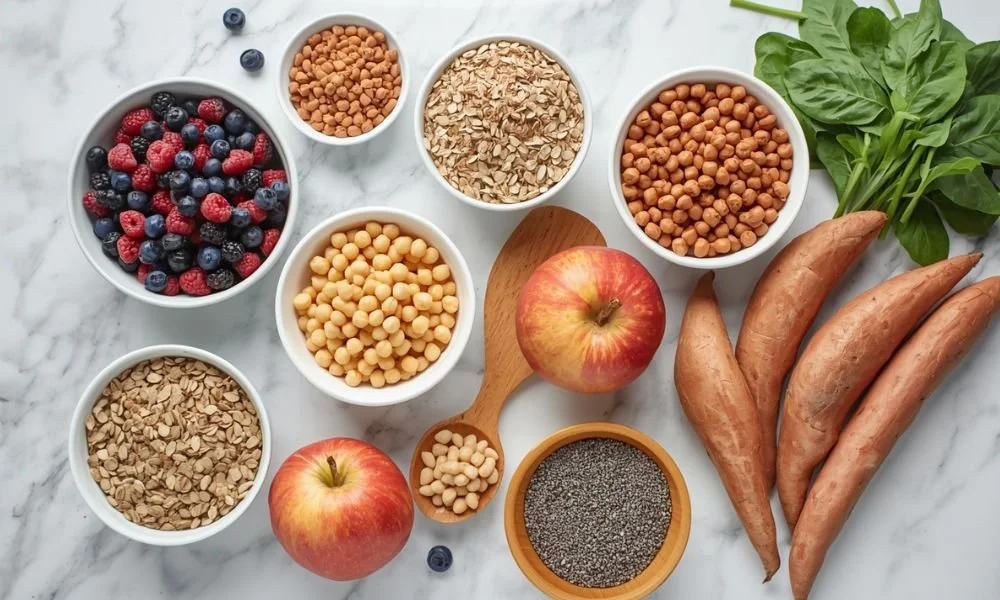
Fruits
Berries
Apples
Pears
Oranges
Peaches
Kiwi
Vegetables
Broccoli
Carrots
Spinach
Brussels sprouts
Peppers
Green beans
Sweet potatoes
Beans and Legumes
Black beans
Chickpeas
Lentils
Kidney beans
Edamame
Split peas
Whole Grains
Oats
Brown rice
Quinoa
Whole grain bread
Whole grain wraps
Barley
Seeds and Nuts
Chia seeds
Ground flaxseed
Pumpkin seeds
Almonds
Walnuts
Easy Ways to Add Fiber to Meals
Breakfast
Add chia seeds to yogurt
Choose oatmeal with berries
Add spinach to eggs
Blend berries into a smoothie
Use whole grain toast
Lunch
Add chickpeas to salad
Choose a whole grain wrap
Add lentils to soup
Eat vegetables with hummus
Add beans to a bowl
Dinner
Add roasted vegetables
Use quinoa instead of white rice
Add beans to tacos
Eat sweet potato with protein
Choose vegetable-based soups
Snacks
Apple with peanut butter
Carrots with hummus
Greek yogurt with berries
Roasted chickpeas
Pear with cottage cheese
Chia pudding
Fiber and Hydration Go Together
As you increase fiber, make sure you are drinking enough fluids. Fiber works best when paired with hydration.
If you add fiber but do not drink enough fluids, constipation may feel worse.
Simple hydration habits:
Drink water when you wake up
Keep a water bottle nearby
Sip throughout the day
Add fruit or herbs for flavor
Choose water with meals
Limit sugary drinks
What If Fiber Makes You Bloated?
If you feel bloated, slow down.
Try:
Smaller portions
Cooked vegetables instead of raw
Gradually increasing fiber
Drinking more water
Choosing gentler foods like oats, bananas, soups, and cooked carrots
Talking with your provider if symptoms continue
Some bloating can happen when fiber increases too quickly. The goal is progress, not perfection.
Best Fiber Strategy for GLP-1 Patients
If you are on a GLP-1 medication and eating less overall, choose fiber foods that also provide nutrition.
Good options include:
Greek yogurt with berries and chia
Chicken salad with beans
Lentil soup
Eggs with vegetables
Protein smoothie with berries and spinach
Salmon with roasted vegetables
Turkey wrap with whole grain tortilla and vegetables
Want Support With Weight Loss Nutrition?
Healthy Resolutions provides telemedicine medical weight loss care for patients in Connecticut, Massachusetts, Rhode Island, New York, and Tennessee.
If you need help building a realistic nutrition plan while losing weight, we can guide you through the process.
