
What to Eat When You Have No Appetite on a GLP-1
A lower appetite is one reason GLP-1 medications may support weight loss. But sometimes appetite can feel so low that eating becomes difficult.
If you are thinking, “I know I need to eat, but nothing sounds good,” you are not alone.
The goal is not to force large meals. The goal is to choose small, nutrient-dense foods that help support your body while you are losing weight.
Why Appetite May Be Lower
GLP-1 medications can affect hunger, fullness, and digestion. Some patients feel satisfied with smaller amounts of food. Others may have nausea, fullness, or food aversions, especially when starting medication or after a dose adjustment.
Mayo Clinic notes that nausea, vomiting, diarrhea, constipation, bloating, stomach discomfort, fatigue, dizziness, and headaches may occur when starting or increasing doses of weight-loss medications, and these symptoms often improve as the body adapts.
Always contact your provider if symptoms are severe, persistent, or concerning.
Focus on Small Amounts of Protein
When appetite is low, protein is a helpful first priority.
Try small portions of:
Greek yogurt
Cottage cheese
Scrambled eggs
Hard-boiled eggs
Chicken soup
Turkey roll-ups
Tuna salad
Protein smoothie
Low-sugar protein shake, if appropriate
Tofu
Lentil soup
Even a few bites can be a start.
Choose Gentle Foods
Some foods may feel easier to tolerate than others.
Gentle options may include:
Soup
Smoothies
Greek yogurt
Oatmeal
Eggs
Bananas
Toast
Cottage cheese
Applesauce
Soft cooked vegetables
Rice
Small portions of chicken or fish
If greasy, spicy, or very heavy foods make nausea worse, choose simpler meals for a while.
Try Mini Meals Instead of Full Meals
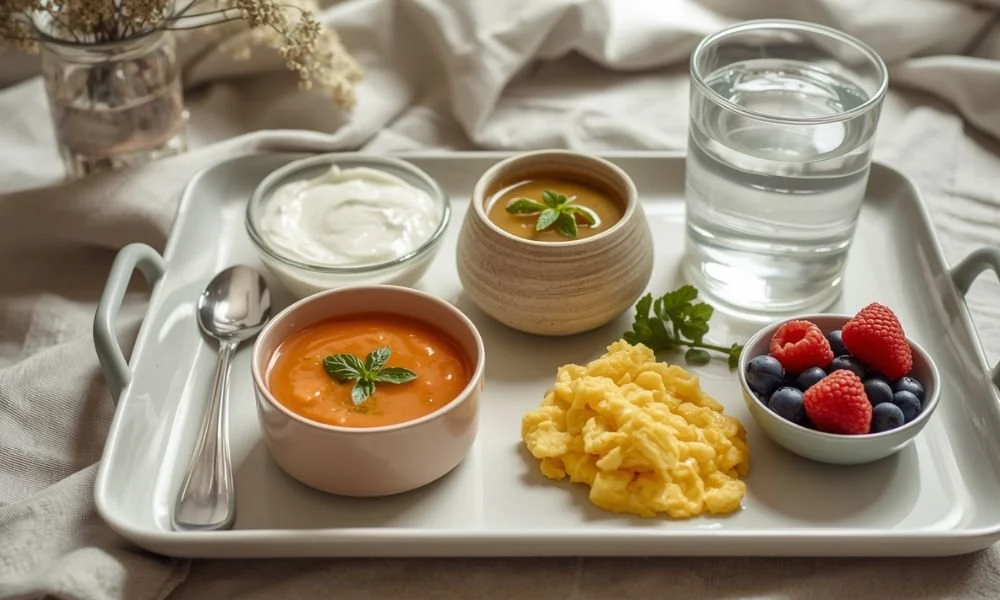
You do not need three large meals if that feels impossible.
Try eating small amounts every few hours.
Example day:
Morning: Greek yogurt with berries
Midday: Scrambled egg and toast
Afternoon: Protein smoothie
Dinner: Chicken soup
Evening: Cottage cheese or a few turkey roll-ups
This can feel more manageable than sitting down to a large plate of food.
Sip, Do Not Chug
Hydration still matters, but drinking large amounts at once may feel uncomfortable for some people.
Try sipping slowly throughout the day.
Helpful options:
Water
Herbal tea
Broth
Electrolyte drink, if recommended
Water with lemon
Ice chips if nauseous
Avoid Skipping All Day
When appetite is low, it can be easy to go hours without eating. But skipping all day may increase fatigue, nausea, weakness, or headaches for some people.
Try setting simple reminders:
Eat a few bites of protein in the morning
Have a small snack by midday
Sip water regularly
Keep easy foods available
Choose simple meals that do not require cooking
When to Contact Your Provider
Reach out to your provider if you have:
Severe nausea
Repeated vomiting
Signs of dehydration
Dizziness or fainting
Inability to keep fluids down
Ongoing constipation
Severe stomach pain
Very low food intake for multiple days
Rapid or concerning weight loss
Weakness that interferes with daily life
You should not feel like you have to “push through” severe symptoms.
Medical Weight Loss Should Feel Supported
At Healthy Resolutions, your provider can help you understand what is normal, what is not, and what changes may be needed.
Sometimes nutrition changes help. Sometimes medication timing, dose adjustments, hydration, or additional evaluation may be needed. That is why medical supervision matters.
Feeling Unsure About What to Eat During Medical Weight Loss?
Healthy Resolutions helps patients in Connecticut, Massachusetts, Rhode Island, New York, and Tennessee with provider-guided telemedicine weight loss care.
If you are experiencing low appetite, nausea, or questions about nutrition while taking a GLP-1 medication, we can help you understand your next steps.
