
How to Stay Hydrated During Medical Weight Loss
Hydration is one of the simplest habits to overlook during medical weight loss.
When your appetite decreases, your thirst cues and fluid intake may decrease too. Some people also eat fewer water-rich foods, such as fruits, vegetables, soups, and smoothies.
Staying hydrated can support digestion, energy, regularity, and overall wellness.
Why Hydration Matters
Water plays an important role in the body. It supports digestion, circulation, temperature regulation, nutrient movement, and waste removal.
Nutrition is not only about food. MedlinePlus notes that good nutrition includes nutrients such as proteins, carbohydrates, fats, vitamins, minerals, and water.
During weight loss, hydration becomes especially important if you are eating less, increasing fiber, exercising more, or experiencing side effects like nausea, vomiting, constipation, or diarrhea.
Signs You May Need More Fluids
Possible signs of low fluid intake may include:
Dark yellow urine
Dry mouth
Headaches
Dizziness
Fatigue
Constipation
Feeling lightheaded
Muscle cramps
Low energy
These symptoms can have many causes, so talk with your provider if they persist or feel concerning.
Hydration Tips for GLP-1 Patients
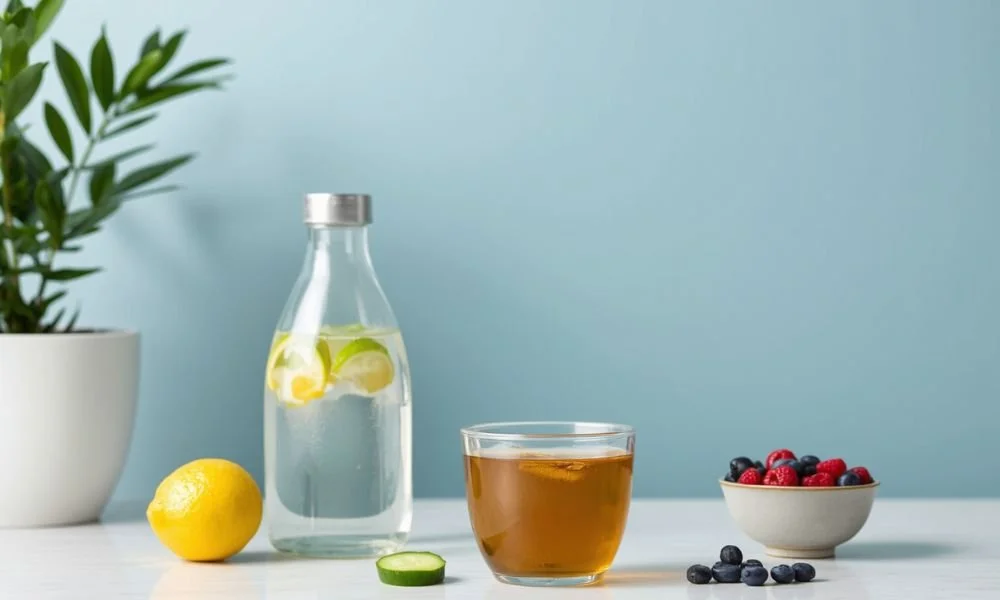
If drinking a large glass of water feels uncomfortable, try sipping slowly.
Helpful strategies:
Keep a water bottle nearby
Start your morning with water
Sip between meals
Use a straw if it helps
Add lemon, mint, cucumber, or berries
Try herbal tea
Eat soups or broth-based meals
Choose water-rich foods
Set reminders on your phone
Water-Rich Foods
You can also hydrate through foods.
Try:
Cucumber
Watermelon
Oranges
Berries
Lettuce
Tomatoes
Celery
Soups
Smoothies
Greek yogurt
Applesauce
These foods can be especially helpful when appetite is low.
For more answers, visit our Medical Weight Loss FAQ page.
Hydration and Fiber
Fiber and water work together. If you increase fiber but do not drink enough fluids, constipation may worsen.
If you are adding more fiber during weight loss, increase fluids gradually too.
Examples:
Oatmeal with berries + water
Lentil soup + herbal tea
Chia yogurt + water
Vegetable soup + water
Apple with peanut butter + water
Do You Need Electrolytes?
Some patients may benefit from electrolytes, but not everyone needs them daily.
Ask your provider if electrolytes are appropriate, especially if you have high blood pressure, kidney disease, heart conditions, or are taking medications that affect fluid balance.
Choose lower-sugar options when appropriate.
Drinks to Limit
Some drinks may not support your goals or may worsen symptoms for certain people.
Limit or monitor:
Sugary drinks
Alcohol
Large amounts of caffeine
Carbonated drinks if they cause bloating
Cream-heavy coffee drinks
Energy drinks
You do not need to be perfect. Just be aware of how these drinks affect your appetite, hydration, sleep, and digestion.
Simple Hydration Goal
Instead of trying to be perfect, build a routine.
Example:
Water when you wake up
Water or tea between breakfast and lunch
Water with lunch
Water mid-afternoon
Water or herbal tea with dinner
Small sips in the evening if needed
Consistency matters more than perfection.
When to Call Your Provider
Contact your provider if you have:
Repeated vomiting
Diarrhea that does not improve
Dizziness or fainting
Very dark urine
Confusion
Severe weakness
Inability to keep fluids down
Signs of dehydration
Medical weight loss should be monitored and supported.
Need Support During Medical Weight Loss?
Healthy Resolutions offers telemedicine weight loss care for patients in Connecticut, Massachusetts, Rhode Island, New York, and Tennessee.
If you have questions about hydration, nutrition, GLP-1 medication, or medical weight loss, our providers can help you create a safe and realistic plan.
