
What Should You Eat While Taking GLP-1 Medication?
If you are taking a GLP-1 medication for weight loss, one of the most common questions is: “What should I actually eat?”
The answer does not need to be complicated. GLP-1 medications may help reduce appetite and support fullness, but nutrition still plays an important role in how you feel, how your body responds, and how sustainable your weight loss journey becomes. A balanced eating plan usually includes protein, vegetables, fruit, whole grains, healthy fats, and enough fluids. The CDC describes healthy eating as a pattern that emphasizes vegetables, fruits, protein, dairy without added sugars, healthy fats, and whole grains.
Why Nutrition Still Matters on a GLP-1
GLP-1 medications can help decrease hunger and slow digestion, which may make it easier to eat smaller portions. But eating less does not automatically mean eating well.
When your appetite is lower, it becomes even more important to choose foods that provide nutrients. Skipping meals or relying only on very small amounts of food can leave you feeling tired, weak, nauseous, or undernourished.
A good goal is to make each meal simple but intentional.
Start With Protein
Protein is important during weight loss because it helps support muscle, fullness, and overall nutrition. Many patients find it helpful to include a source of protein at each meal or snack.
Protein options may include:
Chicken
Turkey
Fish
Eggs
Greek yogurt
Cottage cheese
Tofu
Beans
Lentils
Protein smoothies
Lean beef
Low-sugar protein shakes, if recommended by your provider
You do not need a perfect meal plan. You just need consistent, protein-focused choices that fit your appetite and lifestyle.
Add Fiber Slowly
Fiber can support digestion, fullness, and bowel regularity. This matters because constipation can happen for some people taking GLP-1 medications. MedlinePlus notes that fiber helps with digestion and may help prevent constipation, but it should be added slowly to reduce gas, bloating, or cramping.
Fiber-rich foods include:
Berries
Apples
Pears
Vegetables
Beans
Lentils
Oats
Chia seeds
Ground flaxseed
Whole grains
Sweet potatoes
If you are not used to eating much fiber, do not jump from very little fiber to a very high-fiber diet overnight. Start small and increase gradually.
Choose Smaller, Balanced Meals
Some people taking GLP-1 medication feel full very quickly. Large, heavy meals may feel uncomfortable.
Instead, try smaller balanced meals like:
Eggs with berries
Greek yogurt with chia seeds
Turkey roll-ups with vegetables
Grilled chicken with roasted vegetables
Tuna over greens
Cottage cheese with fruit
A protein smoothie with spinach and berries
Salmon with sweet potato and vegetables
Mayo Clinic notes that for nausea or reduced appetite with weight-loss medications, smaller, more frequent meals may be helpful, and severe nausea or vomiting should be discussed with a doctor.
Limit Foods That May Worsen Side Effects
Not every patient reacts the same way, but some foods may feel harder to tolerate while taking a GLP-1 medication.
These may include:
Greasy or fried foods
Very large meals
Heavy cream-based meals
Sugary foods
Alcohol
Carbonated drinks
Very spicy foods
High-fat fast food
This does not mean you can never have these foods. It means you may want to pay attention to how your body responds.
Stay Hydrated
When appetite goes down, fluid intake can also drop. Hydration supports digestion, energy, and overall wellness.
Simple hydration tips:
Keep water nearby during the day
Sip slowly instead of chugging
Try herbal tea
Add lemon, cucumber, or mint
Use electrolyte drinks only if recommended
Limit sugary drinks
A Simple GLP-1 Plate Formula
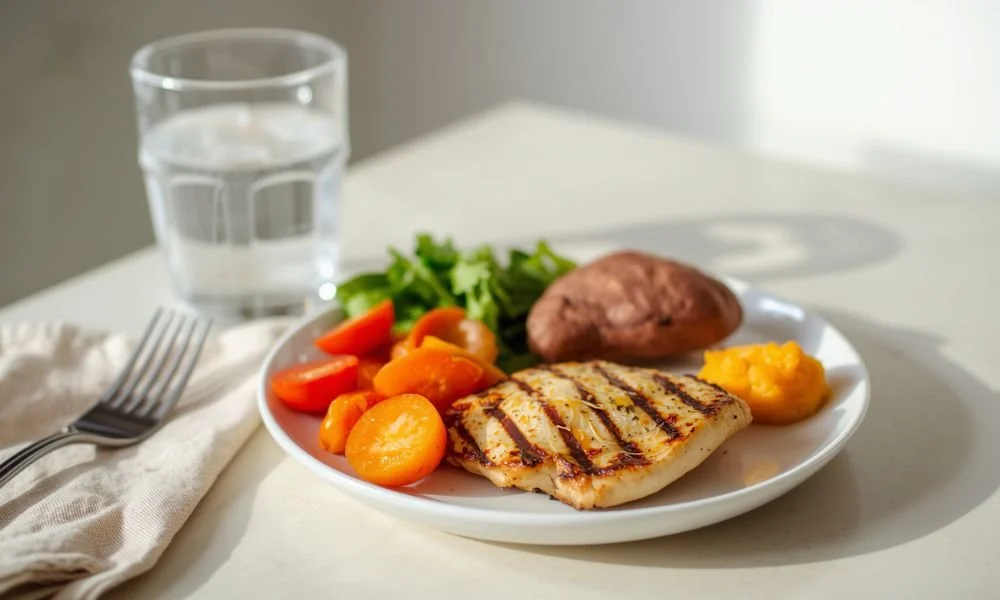
When you are not sure what to eat, use this simple formula:
Protein first
Add a vegetable or fruit
Add a high-fiber carbohydrate if tolerated
Include a small amount of healthy fat
Sip water throughout the day
Example:
Grilled chicken + roasted broccoli + sweet potato + olive oil drizzle
Another example:
Greek yogurt + berries + chia seeds + a few walnuts
What If You Have No Appetite?
If you have very little appetite, focus on small, nutrient-dense options.
Try:
Greek yogurt
Protein smoothie
Cottage cheese
Eggs
Soup with protein
Small turkey and cheese roll-ups
A few bites of chicken with vegetables
Protein shake, if appropriate
If you consistently cannot eat enough, feel weak, or have ongoing nausea, it is important to contact your provider.
Medical Weight Loss Is Not Just Medication
At Healthy Resolutions, medical weight loss is not only about prescribing medication. It is about understanding your health history, goals, nutrition, lifestyle, lab work when needed, and how you are feeling throughout the process.
If you are taking or considering a GLP-1 medication, your provider can help you create a plan that supports your body, not just the number on the scale.
Ready for Personalized Weight Loss Support?
If you are taking a GLP-1 medication or wondering if medical weight loss is right for you, Healthy Resolutions can help you understand your options.
Our telemedicine weight loss program supports patients in Connecticut, Massachusetts, Rhode Island, New York, and Tennessee with provider-guided care, nutrition support, and personalized recommendations.
Schedule a Weight Loss Consultation today to get started.
