
How Much Protein Do You Need While Taking a GLP-1?
Protein is one of the most important nutrients to focus on during medical weight loss, especially if you are taking a GLP-1 medication.
Why? Because when your appetite decreases, your overall food intake may go down. That can make it easier to miss key nutrients, including protein. Protein helps support muscle, fullness, recovery, and everyday energy. The American Heart Association recommends choosing healthy protein sources such as beans, lentils, nuts, fish, seafood, low-fat dairy, lean meats, and skinless poultry.
At Healthy Resolutions, we help patients in Connecticut, Massachusetts, Rhode Island, New York, and Tennessee create realistic weight loss plans that include food, medication guidance when appropriate, and ongoing support.
Why Protein Matters on a GLP-1
GLP-1 medications may help reduce hunger. For many patients, that can be helpful. But if you are eating much less than usual, you may unintentionally eat too little protein.
Protein supports:
Muscle maintenance
Fullness between meals
Blood sugar balance
Recovery after exercise
Healthy aging
More balanced meals
During weight loss, the goal is not just to lose weight. The goal is to support your health while losing weight safely and sustainably.
How Much Protein Do You Need?
Protein needs vary from person to person. Your ideal amount may depend on your age, current weight, medical history, kidney function, activity level, health goals, and provider recommendations.
A general approach is to include protein at each meal and snack rather than trying to eat a large amount all at once.
Your provider may give you a personalized goal. If you have kidney disease, certain medical conditions, or dietary restrictions, you should ask your provider before increasing protein significantly.
Easy Protein Examples
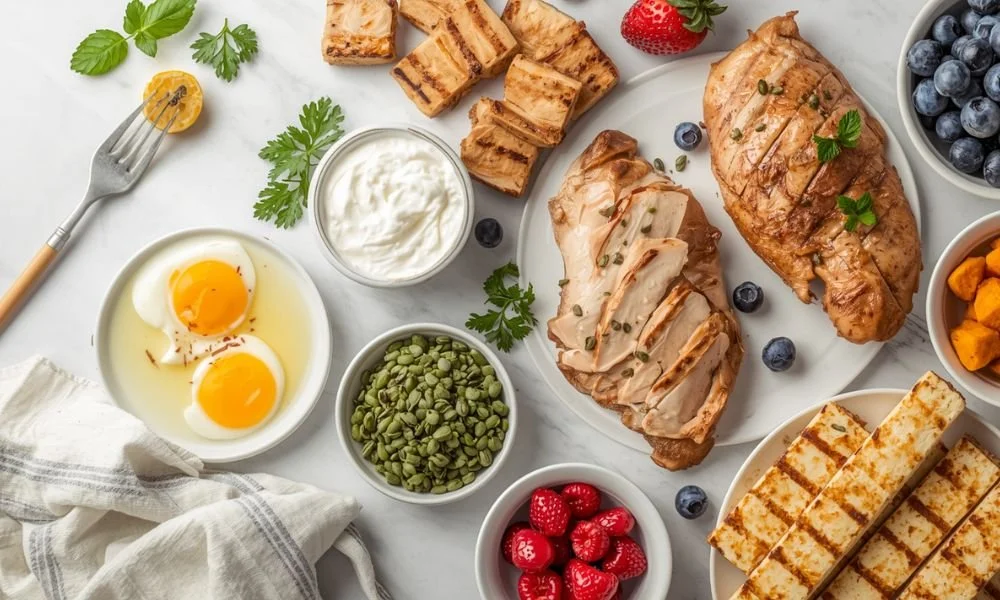
Here are simple protein options that may work well during GLP-1 weight loss:
Eggs
Greek yogurt
Cottage cheese
Chicken
Turkey
Tuna
Salmon
Shrimp
Lean beef
Tofu
Tempeh
Beans
Lentils
Edamame
Protein smoothies
Low-sugar protein shakes, if appropriate
What If You Get Full Quickly?
If you feel full after only a few bites, eat protein first.
For example:
Eat the eggs before the toast
Eat the chicken before the rice
Eat the Greek yogurt before the granola
Drink the protein smoothie slowly
Choose smaller protein-rich meals throughout the day
This can help you get the most nutrition from the amount you are able to eat.
Protein Meal Ideas for GLP-1 Patients
Try these simple combinations:
Greek yogurt + berries + chia seeds
Eggs + avocado + fruit
Chicken + roasted vegetables
Turkey lettuce wraps
Tuna over greens
Cottage cheese + sliced peaches
Protein smoothie with spinach and berries
Salmon + sweet potato + green beans
Tofu stir fry with vegetables
Lentil soup with added chicken or turkey
Can Protein Help With Cravings?
Protein may help meals feel more satisfying. When meals are mostly refined carbohydrates or sugar, some people feel hungry again sooner. A more balanced meal with protein, fiber, and healthy fats may help reduce grazing and support steady energy.
This does not mean you need to eat perfectly. It means protein should become a regular part of your daily routine.
Protein and Exercise
Strength training can be helpful during weight loss because it supports muscle. Protein and movement work together. Even simple strength exercises, walking, or resistance bands may help, depending on your fitness level and medical history.
Ask your provider what type of exercise is safe for you before starting a new routine.
When to Ask Your Provider
Talk with your provider if:
You are unsure how much protein you need
You have kidney disease or other medical conditions
You feel weak or overly tired
You are losing weight very quickly
You cannot eat enough due to nausea or low appetite
You are using protein powders or supplements
Medical weight loss should be personalized. Your protein needs should be too.
Need Help Building a Weight Loss Plan That Feels Realistic?
Healthy Resolutions offers telemedicine medical weight loss care for patients in Connecticut, Massachusetts, Rhode Island, New York, and Tennessee.
If you are taking or considering a GLP-1 medication, we can help you understand how nutrition, protein, hydration, lifestyle, and medical support fit together.
Schedule a Weight Loss Consultation to get started.
